

The National Flood Insurance Program (NFIP) came to a halt on October 1, following the expiration of its temporary authorization by Congress. The lapse, which coincides with the peak of hurricane season, is expected to create major challenges for homeowners, insurers, and real estate markets across the country.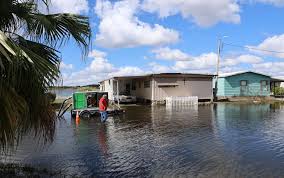
Lawmakers failed to reach an agreement to extend the program before the September 30 deadline, amid broader disputes over federal spending. Without reauthorization, NFIP is no longer able to issue new policies or renew existing ones. However, FEMA, which oversees the program, has confirmed that it will continue processing claims on active policies using existing funds.
Thousands of Home Sales Delayed
The real estate market is already feeling the impact. The National Association of Realtors (NAR) reports that approximately 1,300 home transactions each day—around 40,000 per month—are now being delayed due to the NFIP shutdown. In a letter to lawmakers, NAR urged Congress to pass a long-term reauthorization of the program, paired with critical reforms such as updated flood mapping, investment in mitigation, and modernized pricing models.
NAR research shows that NFIP plays a role in roughly half a million home sales every year.
Leaders Warn of Worsening Risk During Storm Season
In the days leading up to the expiration, insurance officials and state legislators pressed for immediate action. New York Assemblywoman Pamela Hunter, president of the National Conference of Insurance Legislators (NCOIL), warned that any gap in coverage during hurricane season could prove disastrous.
“A temporary fix is better than nothing, but we really need long-term solutions,” Hunter said. “Families, businesses, and entire communities are depending on this program for financial protection during disasters.”
Jimi Grande, senior VP of federal and political affairs at the National Association of Mutual Insurance Companies (NAMIC), said prior to the lapse that “allowing NFIP to expire now is dangerous and unnecessary.”
On October 1, NAMIC President and CEO Neil Alldredge reinforced those concerns, pointing out that hurricane season still has two months to go. “Each day without this coverage puts more Americans at needless risk of losing everything to flooding,” he said.
Alldredge also blamed the situation on years of flawed policy decisions, including outdated flood risk assessments and subsidies that encourage development in high-risk zones. “Homeowners who acted responsibly by purchasing flood insurance shouldn’t be penalized by government inaction,” he said.
Industry Presses for Immediate and Lasting Solutions
Other insurance industry voices echoed the call for reauthorization. Sam Whitfield, senior vice president of federal government relations at the American Property Casualty Insurance Association (APCIA), stressed that the program’s lapse affects not only insurance coverage, but also home financing. “Without NFIP, many mortgage closings cannot proceed, leaving buyers and sellers in limbo,” Whitfield said.
Lizzy Price of the Insurance Fairness Project tied the lapse to broader issues in the insurance market: “This gap in NFIP coverage only makes things worse for families already struggling with rising premiums and limited insurance options, especially as climate change accelerates risk.”
History of Stopgap Measures and Financial Strain
Since 2017, NFIP has been extended more than 30 times, largely through short-term fixes. The most recent extension came in March 2025, shortly after FEMA borrowed $2 billion from the U.S. Treasury to cover a wave of claims following Hurricanes Milton and Helene in 2024.
At that point, FEMA warned that the NFIP’s reserves had been drained by those storms. The Congressional Research Service reported that as of January 25, the program had just $615 million remaining to pay future claims.